ISPCAN International Congress & Rise Up Policy Forum: Join 1,000+ child protection professionals in Melbourne, Australia August 24–27, 2026.

Global Report

Parent and Caregiver Support Programmes - UNICEF

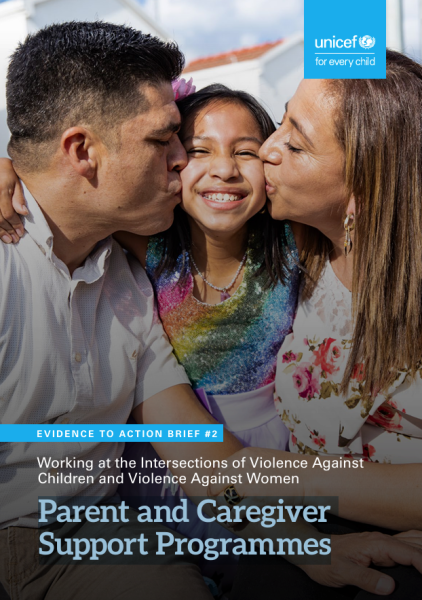
Working at the Intersections of Violence Against Children and Violence Against Women

Parent and Caregiver Support Image

These two forms of violence commonly co-occur, and children raised in homes with intimate partner violence are more likely to experience violent discipline. While distinct, these two types of violence share multiple risk factors at the individual and family level, including couple conflict, substance abuse, economic stress, poor caregiver mental health and men’s dominance in the family. At the societal level, they share risk factors including poverty, high levels of gender inequality, and social and gender norms that condone violence against children and violence against women. Both types of violence have common and compounding consequences for children’s and women’s physical and mental health, and for child development.

A well-established and growing body of evidence demonstrates the multiple ways in which violence against children and violence against women intersect or overlap. This includes similar and compounding consequences for children’s and women’s health and well-being, and for child development.1 In recognition of these intersections, there is growing interest in how parent and caregiver support programmes can be adapted to address both violence against children and violence against women. UNICEF’s current Child Protection Strategy highlights gender-transformative parent and caregiver support programmes as a key approach, as part of the strategic paradigm shift that increases the focus on violence prevention, tackling the structural and behavioural drivers of violence, and working at the intersections.2 This brief summarizes what we know about the potential for parent and caregiver support programmes to reduce both violence against children and violence against women, and why addressing these intersections matters for children’s protection and well-being. It is the second in a series of evidence briefs designed to support UNICEF country offices and other organizations to integrate work on the intersections between violence against children and violence against women.

00
Days
00
Hours
00
Minutes
00
Seconds

Global Report Date:

December 1, 2024

Region:

Africa, Global

Topics:

Parenting
Evidence-based parenting interventions
Parent and Caregiver Support Programmes - UNICEF

Research Objectives:

What we know about violence against children
What we know about Gender-transformative parenting programmes to reduce violence against children and end violence against women
What this means for the work of UNICEF and other organizations
Key resources available to support efforts

Authored By:

Unicef
UNICEF

Join ISPCAN Today!

You’ll receive valuable member benefits including:

  • Access to the Member Connect Platform
  • Discounted registration to ISPCAN Congresses
  • Access to the extensive ISPCAN research library

Connect More

Member Marketplace

Knowledge Hub

Partner with Us