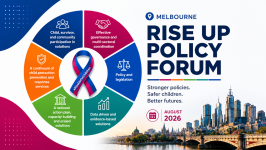
ISPCAN International Congress & Rise Up Policy Forum: Join 1,000+ child protection professionals in Melbourne, Australia August 24–27, 2026.

Europe Regional Hub
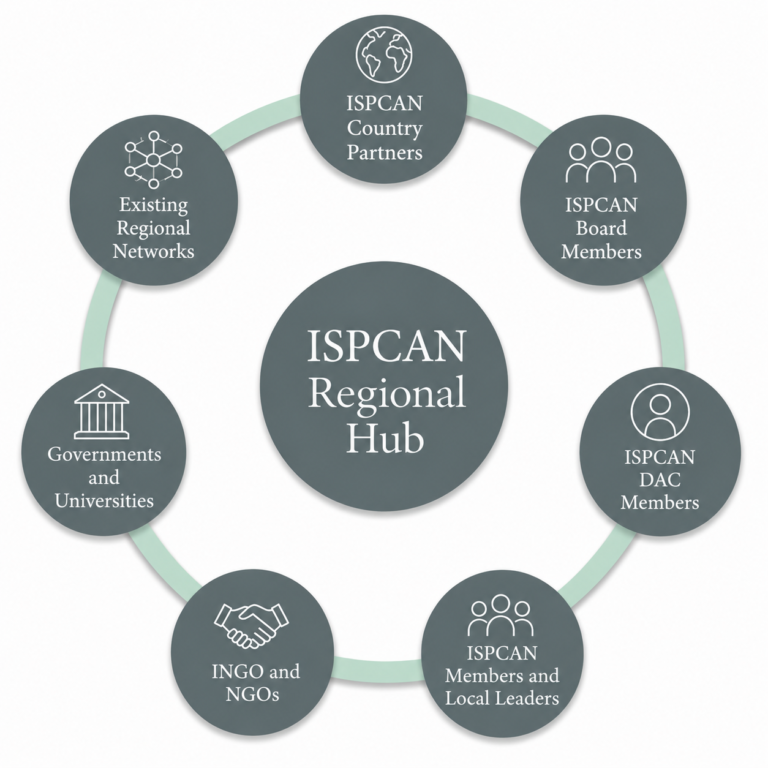
The Europe Regional Network is a group of multidisciplinary professionals working in child abuse & neglect in the region connecting, learning, sharing ideas, research & knowledge.

ISPCAN-Hubs-Europe

Europe Regional Hub Partners

Switzerland
ASPI.logo
ASPI Foundation - Aid, Support and Child Protection
United Kingdom
AoCPP
Association of Child Protection Professionals (AoCPP)
Sweden
Barnafrid Logo
Barnafrid - Linköping University
Portugal
caminhos da infancialogo
Caminhos da Infância
Scotland
website CL
Childlight - Global Child Safety Institute
Italy
CSLI.Logo
The Corpo Italiano di San Lazzaro (CSLI)
Armenia
logo-icon (1)
Child Protection Network
Switzerland
LOGO_ESPAS_baselinedessous
Espace De Soutien Et De Prévention - Abus Sexuels (ESPAS)
Spain
fapmi.logo
Federation of Associations for the Prevention of Child Abuse (FAPMI)
Italy
Logo-tdh-arancione
Fondazione Terre des Hommes Italia ETS
Germany
DGfPI
The German Society for Prevention and Intervention in Child Abuse, Neglect and Sexualized Violence(DGfPI)
Serbia
ITC.BelgradeLogo
Incest Trauma Center - Belgrade
Italy
CISMAI
Italian Coordination of Services against Maltreatment and Child Abuse (CISMAI)
Switzerland
KinderschutzLogo
Kinderschutz Schweiz
United Kingdom
MBIMB Logo
My Body is My Body
Prague
NIDAR Logo
National Institute for Children and Families (NIDAR)
Sweden
nfbologo
Nordic Association for Preventing Child Abuse & Neglect (NASPCAN)
Lithuania
VTAKI_bordo_EN
Office of the Ombudsperson for Child's Rights of the Republic of Lithuania
Scotland
573533502_17851769934578758_5790521778108712240_n
Safe Strong & Free
Greece
eliza_logo
Society for the Prevention of Cruelty to Children (Eliza)
Italy
vettoriale - LOGO SM specchio magico coop sociale onlus VERTICALE
SpecchioMagico
Lithuania
logo-secondary.d8e41ea81c97
State Child Rights Protection and Adoption Service under the Ministry of Social Security and Labour
Scotland
LucyFaithfulLogo
The Lucy Faithful Foundation
Greece
SmileoftheChild
The Smile of the Child
France
UnescoLogo.Hands
Unesco Chair Childhood Maltreatment
Croatia
ZagrebLogo
Zagreb Child and Youth Protection Center

Europe Regional Hub Resources

Do you...

Type of Resource
Resource Type
ISPCAN-resource
Rise Up Session
Making Child Death Review happen: solutions to the challenge of developing population-based child death review programmes

Contributing Partners:

University of Birmingham, UK
Public Health Wales, Government of Wales
Association of Child Death Review Professionals
Taiwan Child Death Review
RUPF Melbourne
Rise Up Session
The cooperation between the Government of the Republic of Armenia and SOS Children's Villages Armenia in the development of alternative care
Presented By:
Spartak Sargsyan

Contributing Partners:

SOS Children's Villages Armenia
Ministry of Labor and Social Affairs, Government of Armenia
Childlight horizontal
Global Report
INTO THE LIGHT Index on Global Technology-Facilitated Child Sexual Exploitation and Abuse 2026
Childlight’s Into the Light Index on Global Technology-Facilitated Child Sexual Exploitation and Abuse 2026 Data Update

Contributing Partners:

CHILDLIGHT Global Child Safety Institute
Human Dignity Foundation
The University of Edinburgh
Image To Zero - Fundraising Guide for Child Sexual Abuse Prevention
Global Report
To Zero - Fundraising Guide for Child Sexual Abuse Prevention
First published in 2024 and updated in 2025, the guide has since become a practical, widely referenced resource for organizations working to prevent child sexual abuse

Contributing Partners:

To Zero
Panorama Strategy
Growing up safe image
Global Report
To Zero - Growing Up Safe - A narrative & messaging guide
To Zero has launched Growing Up Safe, a messaging guide that supports advocates and practitioners in advancing a new narrative about childhood sexual violence — one that focuses on prevention.

Contributing Partners:

ToZero
Spitfire
Out of the Shadows Index
Global Report
2026 Out of the Shadows Index
The Out of the Shadows Index measures global and country-level efforts to address sexual violence against children and adolescents.

Contributing Partners:

Together for Girls
Ecinomist Impact
UN Convention Rights
Downloadable Resource
UN Convention on the Rights of the Child
1.The Convention on the Rights of the Child defines a child as every human being below the age of 18 years unless under the law applicable to the child majority is attained earlier, and emphasizes that States should respect and ensure the rights embodied in the Convention to each child within their jurisdiction without discrimination of any kind. While the Convention recognizes the rights of all persons under 18 years, the implementation of rights should take account of children’s development and their evolving capacities. Approaches adopted to ensure the realization of the rights of adolescents differ significantly from those adopted for younger children.
2.Adolescence is a life stage characterized by growing opportunities, capacities, aspirations, energy and creativity, but also significant vulnerability. Adolescents are agents of change and a key asset and resource with the potential to contribute positively to their families, communities and countries. Globally, adolescents engage positively in many spheres, including health and education campaigns, family support, peer education, community development initiatives, participatory budgeting and creative arts, and make contributions towards peace, human rights, environmental sustainability and climate justice. Many adolescents are at the cutting edge of the digital and social media environments, which form an increasingly central role in their education, culture and social networks, and hold potential in terms of political engagement and monitoring accountability.
3.The Committee observes that the potential of adolescents is widely compromised because States parties do not recognize or invest in the measures needed for them to enjoy their rights. Data disaggregated by age, sex and disability are not available in most countries to inform policy, identify gaps and support the allocation of appropriate resources for adolescents. Generic policies designed for children or young people often fail to address adolescents in all their diversity and are inadequate to guarantee the realization of their rights. The costs of inaction and failure are high: the foundations laid down during adolescence in terms of emotional security, health, sexuality, education, skills, resilience and understanding of rights will have profound implications, not only for their individual optimum development, but also for present and future social and economic development.
4.In the present general comment, the Committee provides guidance to States on the measures necessary to ensure the realization of the rights of children during adolescence, cognizant also of the 2030 Agenda for Sustainable Development. It highlights the importance of a human rights-based approach that includes recognition and respect for the dignity and agency of adolescents; their empowerment, citizenship and active participation in their own lives; the promotion of optimum health, well-being and development; and a commitment to the promotion, protection and fulfilment of their human rights, without discrimination.
5.The Committee recognizes that adolescence is not easily defined, and that individual children reach maturity at different ages. Puberty occurs at different ages for boys and girls, and different brain functions mature at different times. The process of transitioning from childhood to adulthood is influenced by context and environment, as reflected in the wide variation in cultural expectations of adolescents in national legislations, which afford different thresholds for entry into adult activities, and across international bodies, which employ a variety of age ranges to define adolescence. The present general comment does not seek, therefore, to define adolescence, but instead focuses on the period of childhood from 10 years until the 18th birthday to facilitate consistency in data collection.
6.The Committee notes that several of its general comments have a particular resonance for adolescents, notably those relating to adolescent health and development, HIV/AIDS, eradicating practices that are harmful to women and children, unaccompanied and separated children and juvenile justice. The Committee emphasizes the particular significance for adolescents of the recommendations arising from the day of general discussion on digital media and children’s rights. The present general comment has been developed to provide an overview on how the Convention in its entirety needs to be understood and implemented in respect of all adolescents and should be read together with other general comments and with documents arising from the day of general discussion.
IMAGE-~1
Inspire
Ending Corporal Punishment of Children: A short Guide to Effective Law Reform

Contributing Partners:

Global Initiative to End all Corporal Punishment of Children
IMAGE-~1
Inspire
Ending Corporal Punishment in Schools to Transform Education for All Children

Contributing Partners:

End Corporal Punishment
Safe to Learn
Collation for Good Schools
End Violence Against Children
RESOUR~1
Inspire
The Positive Impact of Prohibition of Corporal Punishment on Children's Lives - Messages from Research

Contributing Partners:

End Corporal Punishment
End Violence Against Children
sos knowledge hub
Global Report
Applying Safe Behaviours Scoping Report - Preventing and Responding to Peer and Gender-Based Violence among Vulnerable Children and Young People
Understanding gender-based risks for children and young people and how their experience of peer violence can differ depending on their age and gender.

Contributing Partners:

SOS Children's Villages International
Terre des hommes Lausanne Foundation
ISPCAN
European Social Network
ISPCAN-resource
Partner Resource
SOS Childrens Villages International Applying Safe Behaviours Scoping Report - Preventing and Responding to Peer and Gender-Based Violence among Vulnerable Children
This Scoping Report has been developed as part of the EU co-funded project “Applying Safe Behaviours: Preventing and Responding to Peer Violence and Gender-Based Violence Amongst Vulnerable Children and Young People,” (2025-2027) which is implemented by SOS Children’s Villages and Terre des hommes in Bulgaria, Italy, Kosovo, Romania and Sweden. Through the scoping activities, we sought to understand gender-based risks for children and young people in each of the project countries, and how their experience of peer violence can differ depending on their age and gender. The project is conceptualized through a socio-ecological model8 to GBV and peer on peer violence prevention and response, recognizing that violence is influenced by and impacts multiple levels of an individual’s environment—ranging from personal and interpersonal relationships to community and societal structures. Interventions are designed to activate protective factors across these levels, including capacity-building and awareness-raising for children, young people and the adults and professionals who care for and work with them, collaboration with community stakeholders, and advocacy for systemic policy change. By centring the needs and rights of affected individuals, especially children and youth, the project aims to contribute to a more integrated and sustainable response to gender-based peer on peer violence.
Barnahus PB cover shot
Policy Brief
Investment with impact: Multisectoral actions and coordination in Barnahus

Contributing Partners:

The Barnahus Network
Barnahus Slovenia
Australian Centre for Child Protection
CAC Resources
RUPF Vilnius
Rise Up Session
Advancing Lithuania’s Multi-sectoral Approach to Child Protection Across Three Ministries

Contributing Partners:

Ministry of Education, Science and Sport, Government of Lithuania
Ministry of Social Security and Labour, Government of Lithuania
Ministry of Health, Government of Lithuania
RUPF Africa
Rise Up Session
National Strategies to Strengthen, Finance, and Scale Up the Social Service Workforce as a Critical Pillar of Child Protection Systems, with Example from Bulgaria, Uganda and Armenia

Contributing Partners:

UNICEF
State Agency for Child Protection, Bulgaria
Ministry of Gender, Labour, and Social Development, Govt of Uganda
RUPF Vilnius
Rise Up Session
Investment with Impact – Multidisciplinary Collaboration in Cases Concerning Violence Against Children (Barnahus) with Country Examples

Contributing Partners:

The Barnahus Network
Ministry of Social Affairs, Family and Children, Lithuania
Barnahus Slovenia
Australian Centre for Child Protection
CAC Resources, LLC
RUPF Vilnius
Rise Up Session
The Case for Missingness of Children and Adolescents as an Adverse Childhood Experience

Contributing Partners:

Missing Children Europe
RUPF Vilnius
Rise Up Session
Family Resource Centres: A Low Cost, High Impact, Upstream Policy Strategy for Ensuring Children & Families Thrive

Contributing Partners:

International Association of Family Support Networks
Family Resource Centre National Forum, Ireland
Government of Ireland
RUPF Vilnius
Rise Up Session
Bridging the Knowledge Triad: Integrating Data, Practice-Based Expertise, and Lived Experience to Strengthen Child Protection

Contributing Partners:

Together for Girls
Brave Movement
Safe Futures Hub
National Council on the Administration of Justice, Government of Kenya
WEBINAR image updated
Webinar
ISPCAN/Inter-CAP Petit four Webinar
The webinar will offer perspectives on how healthcare professionals navigate their dual responsibilities within a diversity of legal frameworks across countries.
Presented By:
Dr. Joanne Nelson
Dr. Karen Farst, MD MPH
Dr. Valérie Benoit
Dr. Anish Raj
Dr. Gabriel Otterman
Dr. Kathi Makoroff,

Contributing Partners:

Inter-CAP
no text
Journal Club
Epidemiology, risk factors, and impacts of adverse childhood experiences in Low- and middle-income countries
This SI Journal was conceived to highlight some of the gaps in ACEs research with respect to the inclusion of children and youth residing in LMIC.
Presented By:
Dr. Leah Gilbert, MD, MSPH - Special Issue Guest Editor
Dr. Shanta Dube PhD, MPH, CYT250 - Special Issue Guest Editor
Francis Annor, PhD, MPH - Special Issue Guest Editor
Colvette Brown, MPH
Greta Massetti, PhD, MA
Pedro Manuel, MSc
Phyllis Holditch Niolon, PhD
ISPCAN-resource
Partner Resource
Youth Perspectives on Online Safety in Germany Findings from 2023 quantitative research among 12-16-year-olds in France - THORN Report in German
Thorn published youth-centered research that digs into the experiences of German youth (aged 12-16) with online sexual harms, including cold solicitations, online grooming, sexting, NCII, and the hurdles they face in disclosing their experiences. GERMAN Version
ISPCAN-resource
Partner Resource
Youth Perspectives on Online Safety in Germany Findings from 2023 quantitative research among 12-16-year-olds in France - THORN Report in English
Thorn published youth-centered research that digs into the experiences of German youth (aged 12-16) with online sexual harms, including cold solicitations, online grooming, sexting, NCII, and the hurdles they face in disclosing their experiences. ENGLISH Version
ISPCAN-resource
Partner Resource
Youth Perspectives on Online Safety in France Findings from 2023 quantitative research among 12-16-year-olds in France - THORN Report in French
Thorn published youth-centered research that digs into the experiences of French youth (aged 12-16) with online sexual harms, including cold solicitations, online grooming, sexting, NCII, and the hurdles they face in disclosing their experiences. FRENCH VERSION