Middle East Regional Hub
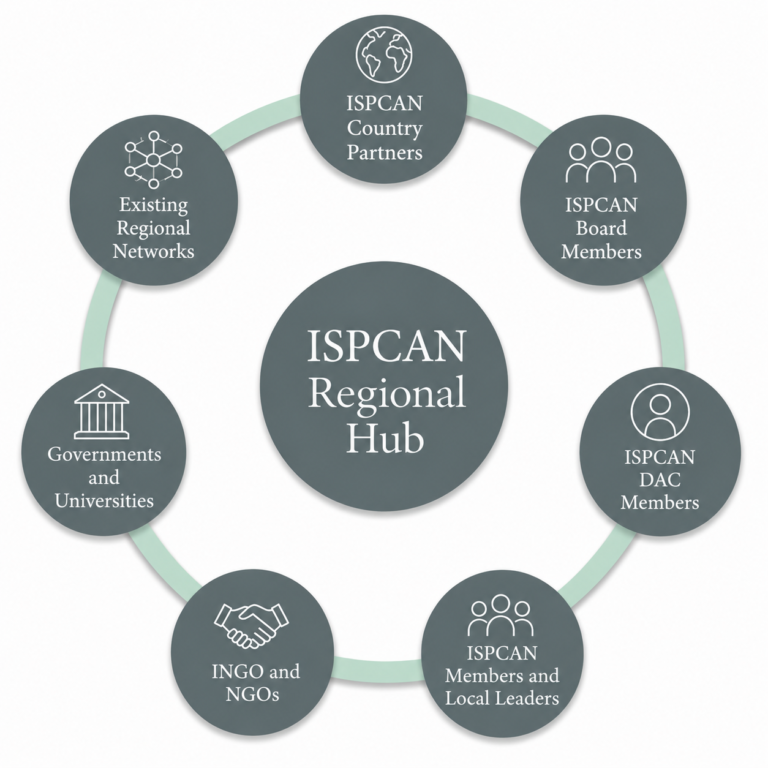
The Middle East Regional Network is a group of Middle East-based multidisciplinary professionals working in child abuse & neglect connecting, learning, sharing ideas, research & knowledge.
ISPCAN-Hubs-Middle East

Regional Country Partners

United Arab Emirates (UAE)
AbuDhabiCenter.Logo
Abu Dhabi Center for Sheltering and Humanitarian Care
United Arab Emirates (UAE)
IJIOLogo
Abu Dhabi Early Childhood Authority (ECA)
United Arab Emirates
ChildSafeME
CHILD SAFE Middle East
United Arab Emirates (UAE)
DFWACLogo
Dubai Foundation for Women & Children (DFWAC)
United Arab Emirates
dxbpolice
Dubai Police
Iraq
EADE Logo
E.A.D.E
United Arab Emirates (UAE)
SSSD Image
Government of Sharjah Social Services Department (SSSD)
Lebanon
Afel
Lebanese Child Home Association (AFEL)
Saudi Arabia
NFSPLogo
National Family Safety Program (NFSP)
Qatar
SidraMedicineLogo
Sidra Medicine

Middle East Regional Hub Resources

Do you...

pexels-photo-2026960

Many resources are available to members only. Join today to take advantage of all member resources.

Childlight horizontal
Global Report
INTO THE LIGHT Index on Global Technology-Facilitated Child Sexual Exploitation and Abuse 2026
Childlight’s Into the Light Index on Global Technology-Facilitated Child Sexual Exploitation and Abuse 2026 Data Update
Authored By:
CHILDLIGHT Global Child Safety Institute
Human Dignity Foundation
The University of Edinburgh
May 19, 2026
Public Resource
Image To Zero - Fundraising Guide for Child Sexual Abuse Prevention
Global Report
To Zero - Fundraising Guide for Child Sexual Abuse Prevention
First published in 2024 and updated in 2025, the guide has since become a practical, widely referenced resource for organizations working to prevent child sexual abuse
Authored By:
To Zero
Panorama Strategy
May 18, 2026
Public Resource
Growing up safe image
Global Report
To Zero - Growing Up Safe - A narrative & messaging guide
To Zero has launched Growing Up Safe, a messaging guide that supports advocates and practitioners in advancing a new narrative about childhood sexual violence — one that focuses on prevention.
Authored By:
ToZero
Spitfire
May 18, 2026
Public Resource
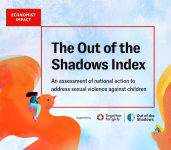
Out of the Shadows Index
Global Report
2026 Out of the Shadows Index
The Out of the Shadows Index measures global and country-level efforts to address sexual violence against children and adolescents.
Authored By:
Together for Girls
Ecinomist Impact
May 18, 2026
Public Resource

Additional Resources

This TL;DR video presents an overview of the critical research, “Enhancing a Survivor-Centred Approach to Healthcare Provision in Afghanistan,” from the Journal of Child Abuse and Neglect. The study focuses on the unique challenges male victims/survivors of sexual violence face in accessing healthcare services in Afghanistan, a context deeply affected by conflict.

EVIDENT

Partner Resource

(Public Access)

The effects of cult’s on its members are well documented in both the research literature and the media, and focus mainly on negative aspects (Dawson, 2006; Olson, 2006). Although the research literature has examined the perceptions of cult members and the social and psychological processes related to the formation of cults, there is almost no reference in the research literature nor even public visibility to the point of view of children that were born or raised in cults.

1. Aya Almog-Zaken- Phd. Candidate, The Hebrew University of Jerusalem 2. Prof. Dafna Tener- Advisor, The Hebrew University of Jerusalem 3. Prof. Asher Ben-Arieh- Advisor, The Hebrew University of Jerusalem

Downloadable Resource

(Public Access)

AI for Safer Children is a joint initiative between UAE Ministry of Interior and UNICRI aiming to support global law enforcement in exploring the positive potential of Artificial Intelligence (AI) to tackle Child Sexual Exploitation and abuse online.

United Arab Emirates Ministry of Interior - UNICRI

Downloadable Resource

(Public Access)

Address Middle Eastern social and cultural norms regarding child neglect

Shaymaa Alkhulaitit - Social Worker and Advanced Mental Health Counselor

Downloadable Resource

(Public Access)

This Country Data Profile is based on information provided by knowledgeable professionals in the country. It is often difficult to capture the varying circumstances and ISPCAN was unable to verify the accuracy of the information. It is our hope that each profile offers a useful snapshot of issues related to child protection in each country. The 2020 World Perspectives survey was modified for this most recent data collection, mostly to help clarify the meaning of some questions and provide more guidance to respondents. Respondents were given a link to complete the survey online. The development of the survey was guided by input from an international advisory committee convened for the purposes of collecting country level data and who are acknowledged for their invaluable contributions. The content covered consideration of what circumstances were CM in the country; specific policies regarding CM; legal responses to child sexual exploitation (CSE); services used to address CM; prevention strategies; and barriers to prevention. Data was gathered between December 2019 and February 2020. It is important to note that data on many of the issues may not have been available, requiring respondents to provide educated estimates.

ISPCAN

Downloadable Resource

(Member Access)

The following Regional Data Profile is based on information provided by knowledgeable professionals in the country. It is often difficult to capture the varying circumstances and ISPCAN was unable to verify the accuracy of the information. It is our hope that each profile offers a useful snapshot of issues related to child protection in each country. The 2020 World Perspectives survey was modified for this most recent data collection, mostly to help clarify the meaning of some questions and provide more guidance to respondents. Respondents were given a link to complete the survey online. The development of the survey was guided by input from an international advisory committee convened for the purposes of collecting country level data and who are acknowledged for their invaluable contributions. The content covered consideration of what circumstances were CM in the country; specific policies regarding CM; legal responses to child sexual exploitation (CSE); services used to address CM; prevention strategies; and barriers to prevention. Data was gathered between December 2019 and February 2020. It is important to note that data on many of the issues may not have been available, requiring respondents to provide educated estimates. We obtained information from 62 countries including 10 countries in Africa, 9 in the Americas, 19 in Asia, 22 in Europe, and Australia and New Zealand in Oceania. Countries were also categorized by income level using designations by the World Bank; 27 countries had high income, 20 upper-middle income and 15 were low income. Those who responded are considered experts in their countries in different disciplines with knowledge of country-level data, and they were encouraged to consult with colleagues when uncertain of an answer. That said, ISPCAN was unable to verify the accuracy of responses. In conclusion, this report offers a snapshot of the state of CM and child protection across many countries across the globe. Taken together over the history of publication, much has been accomplished—especially in terms of awareness of the child maltreatment problem and the development of systems to address it. That said, concerns from infrastructure to expertise, to leveraging the lived experience of communities, remains a challenge made even more.

ISPCAN

Downloadable Resource

(Member Access)

This Country Data Profile is based on information provided by knowledgeable professionals in the country. It is often difficult to capture the varying circumstances and ISPCAN was unable to verify the accuracy of the information. It is our hope that each profile offers a useful snapshot of issues related to child protection in each country. The 2020 World Perspectives survey was modified for this most recent data collection, mostly to help clarify the meaning of some questions and provide more guidance to respondents. Respondents were given a link to complete the survey online. The development of the survey was guided by input from an international advisory committee convened for the purposes of collecting country level data and who are acknowledged for their invaluable contributions. The content covered consideration of what circumstances were CM in the country; specific policies regarding CM; legal responses to child sexual exploitation (CSE); services used to address CM; prevention strategies; and barriers to prevention. Data was gathered between December 2019 and February 2020. It is important to note that data on many of the issues may not have been available, requiring respondents to provide educated estimates.

ISPCAN

Downloadable Resource

(Member Access)

This Country Data Profile is based on information provided by knowledgeable professionals in the country. It is often difficult to capture the varying circumstances and ISPCAN was unable to verify the accuracy of the information. It is our hope that each profile offers a useful snapshot of issues related to child protection in each country. The 2020 World Perspectives survey was modified for this most recent data collection, mostly to help clarify the meaning of some questions and provide more guidance to respondents. Respondents were given a link to complete the survey online. The development of the survey was guided by input from an international advisory committee convened for the purposes of collecting country level data and who are acknowledged for their invaluable contributions. The content covered consideration of what circumstances were CM in the country; specific policies regarding CM; legal responses to child sexual exploitation (CSE); services used to address CM; prevention strategies; and barriers to prevention. Data was gathered between December 2019 and February 2020. It is important to note that data on many of the issues may not have been available, requiring respondents to provide educated estimates.

ISPCAN

Downloadable Resource

(Member Access)

This Country Data Profile is based on information provided by knowledgeable professionals in the country. It is often difficult to capture the varying circumstances and ISPCAN was unable to verify the accuracy of the information. It is our hope that each profile offers a useful snapshot of issues related to child protection in each country. The 2020 World Perspectives survey was modified for this most recent data collection, mostly to help clarify the meaning of some questions and provide more guidance to respondents. Respondents were given a link to complete the survey online. The development of the survey was guided by input from an international advisory committee convened for the purposes of collecting country level data and who are acknowledged for their invaluable contributions. The content covered consideration of what circumstances were CM in the country; specific policies regarding CM; legal responses to child sexual exploitation (CSE); services used to address CM; prevention strategies; and barriers to prevention. Data was gathered between December 2019 and February 2020. It is important to note that data on many of the issues may not have been available, requiring respondents to provide educated estimates.

ISPCAN

Downloadable Resource

(Member Access)

This Country Data Profile is based on information provided by knowledgeable professionals in the country. It is often difficult to capture the varying circumstances and ISPCAN was unable to verify the accuracy of the information. It is our hope that each profile offers a useful snapshot of issues related to child protection in each country. The 2020 World Perspectives survey was modified for this most recent data collection, mostly to help clarify the meaning of some questions and provide more guidance to respondents. Respondents were given a link to complete the survey online. The development of the survey was guided by input from an international advisory committee convened for the purposes of collecting country level data and who are acknowledged for their invaluable contributions. The content covered consideration of what circumstances were CM in the country; specific policies regarding CM; legal responses to child sexual exploitation (CSE); services used to address CM; prevention strategies; and barriers to prevention. Data was gathered between December 2019 and February 2020. It is important to note that data on many of the issues may not have been available, requiring respondents to provide educated estimates.

ISPCAN

Downloadable Resource

(Member Access)