
Researchers and practitioners whose research and/or practice is in the educational field and who have a particular interest in the role of educators in responding to child abuse and neglect.
The aspiration is that the group will enable sharing of research and professional knowledge from different countries, provide a global picture of how education systems deal with the phenomenon of child maltreatment in order to advance practice and policy in this field
Bring your ideas and expertise and collaborate with us on events at ISPCAN Congresses and online throughout the year. Together, we'll create opportunities to explore emerging issues, share and create valuable resources, expand knowledge, and work to bring effective programs into action.

Network with education and child protection experts, and mentors worldwide.
Access to data driven school-based protection programs.
Opportunities to present your work at ISPCAN congresses and virtually.
Work alongside world-renowned school safety experts to make an impact in this critical area.
Learn from others and work on global projects, research, and advocacy initiatives.
Get the expertise and support you need to address educator burnout and fatigue
Sign up for an ISPCAN Membership
Subscribe to the ISPCAN Newsletter and discussions in the member portal
Join the discussion, start connecting & grow your career!
If you are an educator or safety expert or have an interest in learning more about school-based child protection programs, then please join us for the latest cutting-edge research and practice in this area, please consider joining us. This working group is open to active ISPCAN members only.

Thank you to everyone who joined the first pre-conference workshop of the ISPCAN Working Group on Schools
& Child Protection. Around 35 practitioners and researchers took part, representing a wide range of countries,
including Australia, Japan, India, Switzerland, the Cayman Islands, the USA, Indonesia, Kenya, and Taiwan.
For almost all participants, this was their first involvement with the working group – an encouraging start as we
begin to build this international community. Read the workshop summary to learn more about this very impactful meeting.
By addressing the physical, mental and social health needs of students, we can create an environment that supports their overall well-being and academic success.
Half-day pre-congress working group will offer a half-day workshop tailored to CAN professionals.
• Early identification of signs of abuse and neglect in schools.
• Developing school intervention strategies.
• Creating safe and supportive environments for maltreated children.
• Developing partnerships between the education system, child protection, law enforcement, and health agencies.
• Training teachers and educators for identification, reporting, and initial intervention.
• Formulating policy regarding mandatory reporting and child protection.




Dr Eran Melkman is faculty member at the school of education at the Tel-Aviv University. He is a clinical social worker and child welfare researcher with a keen interest in the intersection between child welfare and education.
One strand of his work examines the role of schools and educational staff in responding to child abuse and neglect. Another strand of his work examines the development of risk and resilience across the life course of vulnerable young people in out-of-home care and in the community, with a particular focus on the role of social support networks.

Chrissy, an accomplished and award-winning singer/songwriter and recording artist, has left an indelible mark on the music scenes in both South Africa and Nashville, USA. However, her passion for making a positive impact on the world led her to channel her songwriting skills into a groundbreaking programme called “My Body is My Body” 34 years ago.
This innovative programme was developed in collaboration with the Departments of Education and Human Services in the United States of America. For five years, Chrissy travelled extensively across the USA, visiting states such as Texas, Tennessee, Florida, Virginia, and Atlanta, where she presented the “My Body is My Body” programme in schools to over 350,000 children. It became clear to her that while the live shows were impactful, they could only reach a limited number of children. With a vision to reach a wider audience and make a difference on a global scale, Chrissy decided to transform the program into an animated format that could be shared on the internet and distributed to schools, teachers, and parents worldwide.
“My Body is My Body” has now been translated into 27 languages, and the animations have been viewed over 1.5 million times on YouTube. However, this number underestimates the program’s true reach, as Chrissy provides offline access to many schools, NGOs, and Foundations in areas with limited internet access

“Millions of pounds are spent each year training adults to recognise safeguarding concerns among children. My own childhood experiences and countless life stories from others prove that this is still not enough. Our society also reminds us that PSHE needs to improve. Social issues such as violence, drugs, crime and obesity continue to dominate the world around us. For many years I worked in the secondary sector managing highly successful mentoring and prevention programmes.
I came to realise that earlier intervention is vital in triggering a bigger impact on society. Society is fixated on finding the cure for our problems because we can see results; when a situation appears to be solved. We must stop searching for the cure and instead realise that prevention is the key. It is essential that we give young children the confidence to speak out together with the knowledge and the skills that they need to make safe and positive choices throughout their lives. For the last seven years, I have studied and worked with leading consultants, organisations and schools to develop the most advanced resources for the subject of PSHE.”
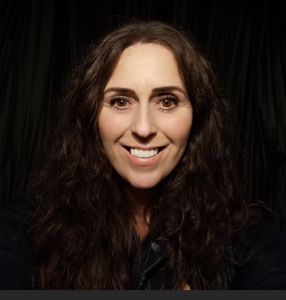
Dr Mia Treacy is a barrister and an Assistant Professor in educational policy at Mary Immaculate College, University of Limerick in Ireland. She is a former primary school teacher and principal.
Mia was seconded to Department of Education support services in Ireland for 11 years, during which time she designed and delivered teacher in-service education. She was on the senior management team of the Professional Development Services for Teachers, where she served as Deputy Director for Design and Research.
Mia has served on several national education boards in Ireland including the Early Childhood and Primary Education Board at the National Council for Curriculum and Assessment; the National Advisory Group for the Development of Revised Standardised Tests, and the National Advisory Committee for National and International Assessments at Primary Level at the Education Research Centre. She also serves on the Academic Council and the Teaching and Learning Directorate at Mary Immaculate College.
Mia has published widely in international peer-reviewed journals and has presented research at international conferences in Europe and the United States. Her research interests include child protection and safeguarding; educational policy; pupil voice; and pre- and in-service education.
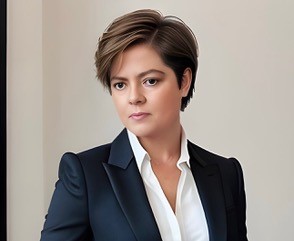
Antonia Noble is a criminal barrister with 30 years’ experience and a global reputation as a safeguarding leader. She has worked at the highest levels in the UK, including as a Cabinet Member for Children’s and Adult Services, where she led on safeguarding, child protection, and multi-agency working.
Antonia chairs SAND Multi Academies Trust and has extensive experience across education, supporting schools to embed effective safeguarding practice. For over 15 years, she has been the Safeguarding Expert for High Speed Training, developing widely used courses on exploitation, online harm and safer practice.
Internationally, she serves on the board of My Body is My Body, a child protection charity, and advises organisations on creating safe environments for children worldwide. Antonia also co-leads Safeguarding Fundamentals, the quality mark for organisations working with children, and runs DSLS Together, a membership supporting safeguarding leads in education.