ISPCAN Regional Hubs for Child Protection represents an essential step toward uniting regional efforts, reinforcing culturally relevant practices, building regional capacity and networks, and encouraging unity towards the shared goal of ending violence against children.
Through regular collaboration, both online and in person, this initiative will foster a sustained movement that connects global child rights frameworks with local realities, working to ensure that every child’s right to protection, dignity, and a safe environment is a priority for every country.
Through continued regional collaboration countries and regions will become more self-reliant, developing sustainable and capacitated child protection workforces and systems, local funding will be strengthened, and community level prevention will be improved. ISPCAN’s ultimate goal is ending child abuse and neglect/improving quality of life for all children by working more closely with our members and regional partners.
ISPCAN Regional Hubs serve as a collaborative platform connecting diverse stakeholders dedicated to the protection and well-being of children across the region. These important Hubs aims to provide a culturally and contextually grounded space for knowledge exchange, capacity building, awareness raising, research and strategic collaboration.
•Understanding of regional issues and developing relevant resources and materials while addressing culturally appropriate and language specific needs
• Engaging more deeply with partners and ISPCAN members, empowering local leaders and developing and contextualizing in-person trainings.
• Developing in person regional Rise Up Policy Forums connecting governments and policy makers with researchers, practitioners and local NGOs
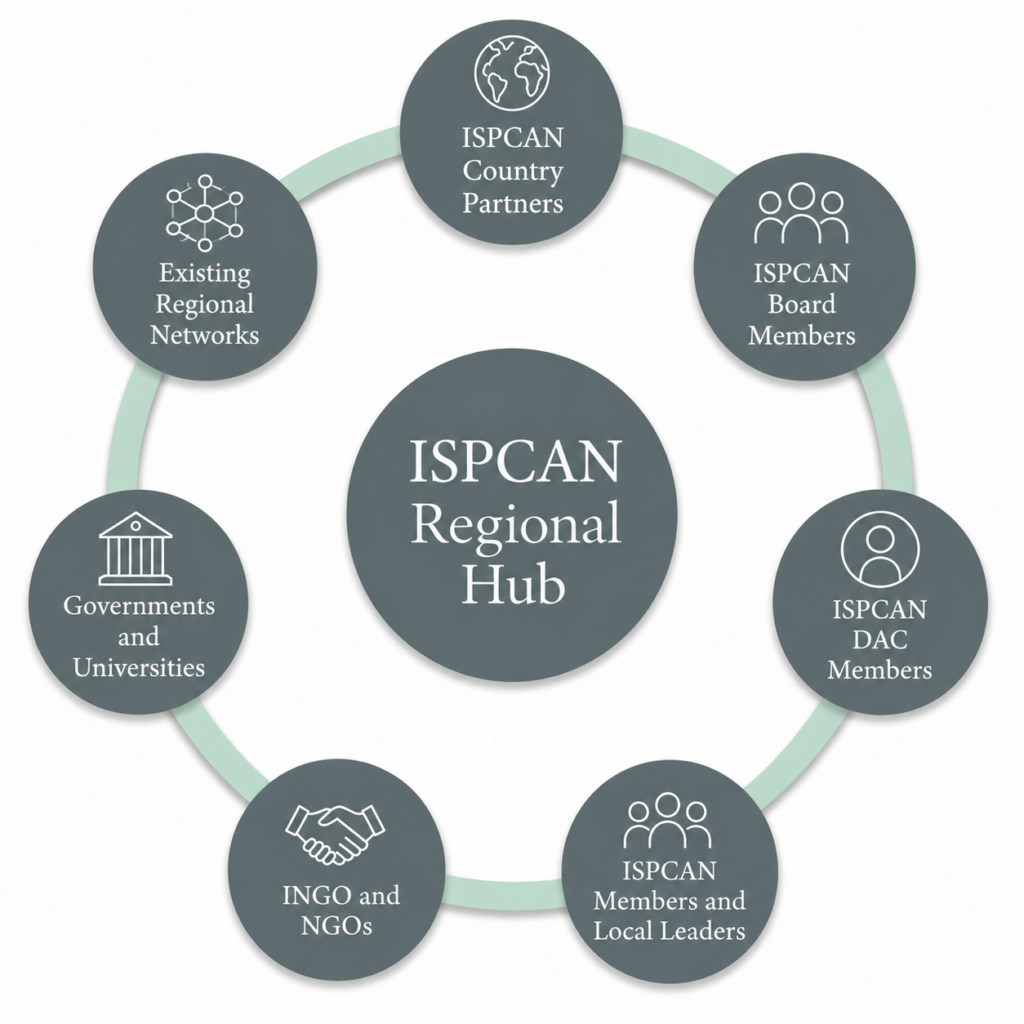
• Connecting country partners, ISPCAN Board and Distinguished Advisory Council (DAC) members, and other leaders in the region
Our Regional Hub initiative aligns with and seeks to advance ISPCAN’s vision and mission to prevent child abuse and neglect through the promotion of science-based practice and collaboration.
ISPCAN Regional hubs offer a localized expression of protection and safeguarding measures, tailored to the regional context, with an emphasis on cultural integrity, regional ownership, expertise and capacity building, and contextual relevance.
The Regional Hubs will contribute to achieving the international children’s rights principle of protection from all forms of violence by building strong, well-connected, and culturally attuned regional ecosystems which will support the wider and deeper implementation of key child protection strategies.
Regional actors, such as governments, NGOs, academic institutions, faith and cultural communities, practitioners and others must come together to share knowledge, align efforts, and contextualise international standards to the region’s needs and realities.
Foster meaningful connections between entities working on child protection ensuring a public health approach and strengthening current systems through policy.
Facilitate the exchange of research, best practices, culturally sensitive tools, and region-specific challenges and solutions.
Lead awareness campaigns tailored to regional contexts to promote child rights, protection frameworks, and safeguarding standards.
Support the professional development of child protection actors through webinars, workshops, and annual forums to be led by selected organizations through the Regional Hub.
Translate and adapt international child protection principles to align with cultural, religious, and social contexts.
Includes government agencies, civil society and community organizations, academics, faith-based organizations, child, youth and survivor networks, and frontline multi-sectoral practitioners such as education, health, and law enforcement.