The Africa Regional Hub
The Africa Regional Hubs for Child Protection represents an essential step toward uniting regional efforts, reinforcing culturally relevant practices, building regional capacity and networks, and encouraging unity towards the shared goal of ending violence against children.
Through regular collaboration, both online and in person, this initiative will foster a sustained movement that connects global child rights frameworks with local realities, working to ensure that every child’s right to protection, dignity, and a safe environment is a priority for every country.
Through continued regional collaboration countries and regions will become more self-reliant, developing sustainable and capacitated child protection workforces and systems, local funding will be strengthened, and community level prevention will be improved. ISPCAN’s ultimate goal is ending child abuse and neglect/improving quality of life for all children by working more closely with our members and regional partners.
About the Africa Regional Hub
Who We Are:
The ISPCAN Africa Regional Hub serves as a collaborative platform connecting diverse stakeholders dedicated to the protection and well-being of children across the region. This Hub aims to provide a culturally and contextually grounded space for knowledge exchange, capacity building, awareness raising, research and strategic collaboration.
This multi-partner exchange will enable and enhance:
•Understanding of regional issues and developing relevant resources and materials while addressing culturally appropriate and language specific needs
• Engaging more deeply with partners and ISPCAN members, empowering local leaders and developing and contextualizing in-person trainings.
• Developing in person regional Rise Up Policy Forums connecting governments and policy makers with researchers, practitioners and local NGOs
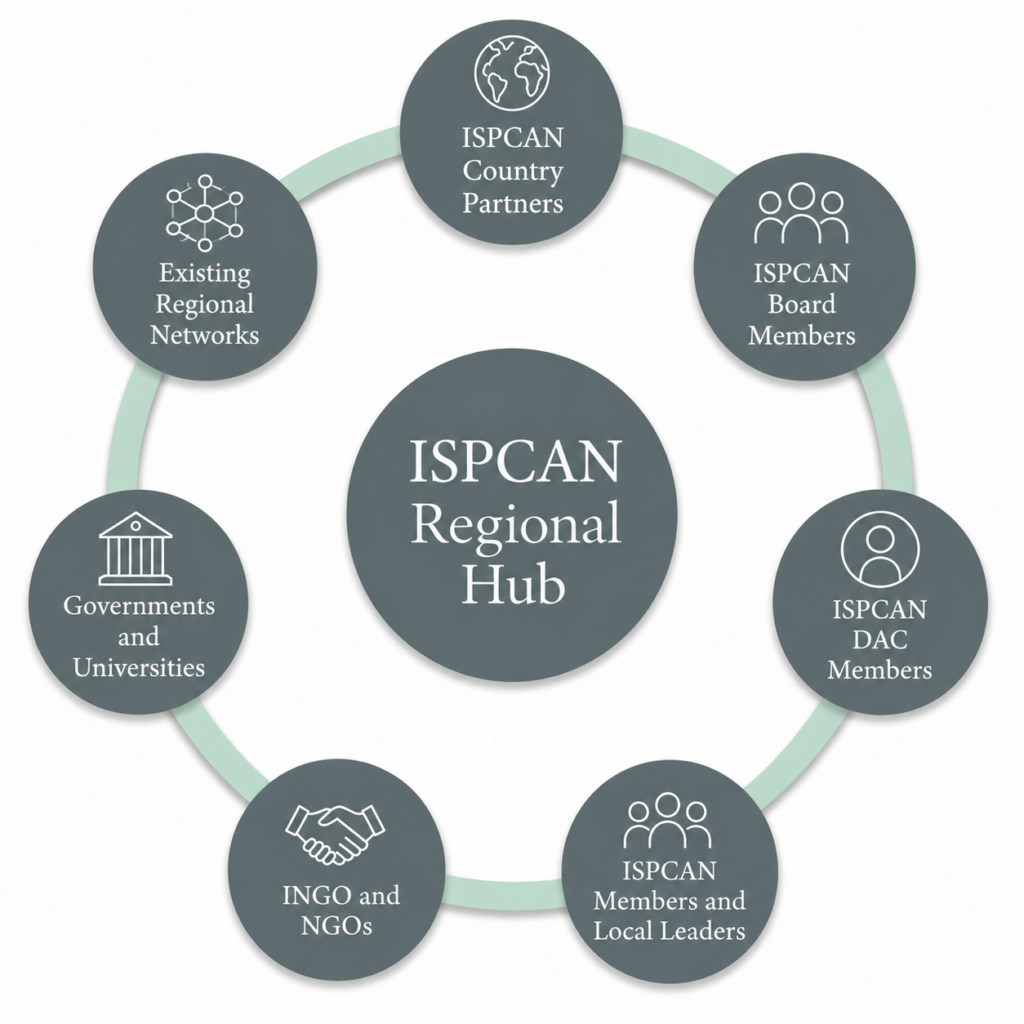
• Connecting country partners, ISPCAN Board and Distinguished Advisory Council (DAC) members, and other leaders in the region
Africa Regional Hub Leadership Structure
The Africa Regional Hub initiative aligns with and seeks to advance ISPCAN’s vision and mission to prevent child abuse and neglect through the promotion of science-based practice and collaboration.
ISPCAN Regional hubs offer a localized expression of protection and safeguarding measures, tailored to the regional context, with an emphasis on cultural integrity, regional ownership, expertise and capacity building, and contextual relevance.
The Africa Regional Hub will contribute to achieving the international children’s rights principle of protection from all forms of violence by building strong, well-connected, and culturally attuned regional ecosystems which will support the wider and deeper implementation of key child protection strategies.
Each global region is characterised by distinct cultural diversity, religion, socio-political-economic landscape, norms and values and more. The unique contexts present a powerful opportunity and rationale for localized regional approaches to developing innovative, culturally grounded strategies, networks and capacity building that strengthen the safety and well-being of children across all communities.
Regional actors, such as governments, NGOs, academic institutions, faith and cultural communities, practitioners and others must come together to share knowledge, align efforts, and contextualise international standards to the region’s needs and realities.
Goals and Objectives
Each member of the Hub has an equal voice at the table to learn, share and devise a plan of action for ISPCAN to endorse and support.
Regional connectivity
Foster meaningful connections between entities working on child protection ensuring a public health approach and strengthening current systems through policy.
Knowledge sharing and learning
Facilitate the exchange of research, best practices, culturally sensitive tools, and region-specific challenges and solutions.
Awareness and advocacy
Lead awareness campaigns tailored to regional contexts to promote child rights, protection frameworks, and safeguarding standards.
Capacity building
Support the professional development of child protection actors through webinars, workshops, and annual forums to be led by selected organizations through the Regional Hub.
Localization of global standards
Translate and adapt international child protection principles to align with cultural, religious, and social contexts.
Multi-Sectorial Leadership
Includes government agencies, civil society and community organizations, academics, faith-based organizations, child, youth and survivor networks, and frontline multi-sectoral practitioners such as education, health, and law enforcement.
Why Join the Africa Regional Hub?
As an ISPCAN Member, partner, funder and colleague, joining our Regional Hubs can be a valuable asset to your mission. In addition to advancing and amplifying the great work that can be done collectively, you will personally benefit by:
1) Lending your expertise and knowledge of the region to co-create the Regional Hub goals and initiatives
2) Demonstrating your leadership within the region beyond your current role and organization
3) Driving activities to fill key gaps and opportunities within the region
4) Strengthening your work and better showcase your effective evidence-driven programs
5) Connecting you to the content experts that exists within our international network
6) Connecting you to cutting-edge research to amplify your efforts and to drive policy initiatives within the region
Get Involved
Membership in the Africa Regional Hub
- In person and Online engagement: a dynamic space for continuous engagement, resource sharing, joint projects and events.
- Annual Regional Forum: a once-a-year in-person gathering to review progress, exchange learning, and strengthen regional networks. Rise Up and Huddle forums, etc.
- Thematic Working Groups: Task-specific groups addressing emerging or priority issues
- Government and public sector entitiesUN agencies and international NGOs active in the region
- Faith-based and community organizations, religious and community leaders
- Cultural institutions
- Academics and research organisations
- Youth representatives and child rights advocates
- Survivors and survivor networks
ISPCAN retains the right to accept or modify all aspects of the Regional Hub.
The goals, activities and democratic structure for each regional hub must respect the outlined objectives in spirit and action. The ISPCAN logo and name must be authorized for any use.
All ISPCAN codes of conduct, child safeguarding, and diversity and Inclusion must be adhered to by all people and organizations working with and associated with the Regional Hubs.
Strong safeguarding practices are core to our identity and critical to achieving systemic change in child protection globally. Safeguarding, diversity, inclusion and codes of conduct are not just a policy — it is a promise to everyone we serve and a required part of our business practice.
Who Can Join?
The Africa Regional Hub actively engages government and multisectoral child protection experts and leaders from across the continent to innovate, collaborate, and share best practices, catalyzing progress and turning pledges into progress on the ground. Share your work with fellow African child protection experts

Current Initiatives
Join us for our African Huddle and Rise Up Policy Forum in Kampala Uganda
February 23-25, 2027
Strategic priority themes:
We invite you to join us in strengthening nations and building internal capacity. We stand beside you as partners, working to ensure that every country has the tools, research, and effective systems needed to Rise Up to End Child Abuse and Neglect. ISPCAN remains committed to the African Regional Hub so that the knowledge shared, the practical resources developed, and the learning continues — until we get it right.
1) Effective governance and multisectoral coordination
2) National data systems, evidence generation and monitoring
3) Building domestic capacity through sustainable funding
4) Developing effective evidence-based prevention strategies
African Events and Resources
Africa Huddle Case Based Learning
Using a local Uganda case of child sexual abuse, we will conduct a 4-pillar learning session to improve practice through an in-depth examination of how the system responded. Participants will analyze what could have, should have, and would have improved case responses, fostering practical, context-sensitive improvements in decision-making, policy and service delivery
Africa Rise Up Policy Forum
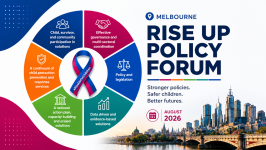
The Policy Forum serves as a community of practice, where countries can engage in ongoing learning, cross-sector collaboration, and the co-creation of child protection strategies. It supports system strengthening and discussions focus on how to improve the effectiveness, accountability and sustainability of national child protection systems.
Regional Parenting Tools
These parenting tools have been adapted to more than 30 country contexts. From here, you can filter and find open-source trainer manuals, guidelines and other resources to create tailored parenting programs. The PLH tools are free to use and available under Creative Commons licensing.