
ISPCAN Data Working Group lead by world renowned experts in the field of research and data collection committed to sharing their time and expertise to create and share impactful research and programs on this critical topic
Advancing the linkages between data and practice, while improving the quality of data collection and publication globally
Bring your ideas and expertise and collaborate with us on events at ISPCAN Congresses and online throughout the year. Together, we'll create opportunities to explore emerging data trends, share and create valuable resources, expand knowledge, and work to bring data to action.

Network with research professionals, experts, and mentors worldwide.
Access to data driven effective programs.
Opportunities to present your work at ISPCAN congresses and virtually.
Work alongside world-renowned research experts to make an impact in this critical area.
Learn from others and work on global projects, research, and advocacy initiatives.
Get the expertise and access the latest cutting-edge research to inform practice.
Sign up for an ISPCAN Membership
Subscribe to the ISPCAN Newsletter and discussions in the member portal
Join the discussion, start connecting & grow your career!
If you are a research professional or have an interest in learning more about data collection for child abuse and neglect, then please join us for the latest cutting-edge research and practice in this area, please consider joining us. The Child Maltreatment Data Collection Working Group is open to active ISPCAN members only.
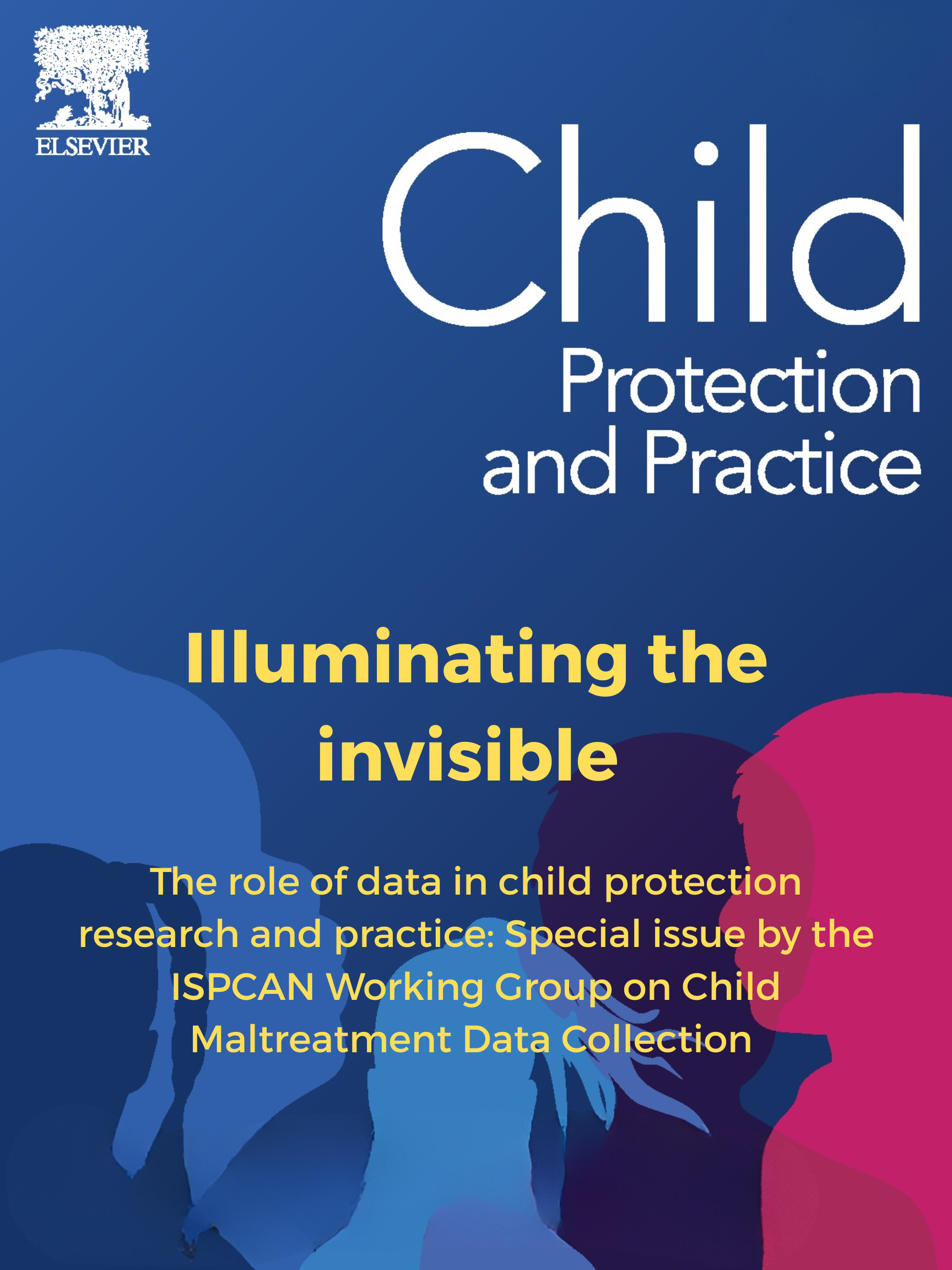
Bring your ideas and expertise and collaborate with us during the pre-congress Child Maltreatment Data Collection Working Group Meetings at our Melbourne congresses. Together, we'll create opportunities to enhance your skills, expand your knowledge, and build meaningful connections.
ISPCAN’s goal with ICAST is to provide a method to make reported incidence of all forms of violence against children more accurate and more representative of the true scope of the problem
Connect with global CAN research experts to seek advice, share data to inform practice and develop resources, discuss challenges, and explore opportunities in the field.
Full-day pre-congress working group will offer a half-day workshop tailored to research and academic professionals.
• Ethical considerations in the collection of child maltreatment data
• Incorporating the voice of children and youth in data collection
• The accurate reporting of incidences of all forms of violence against children to be more representative of the true scope of the problem
• Types of data needed to drive policy change ad improve systems of care
• Investing in Icast Updates and developing a universal set of updated data tools for child protection
• Advancing the linkages between data and practice, while improving the quality of data collection and publication globally




Andreas Jud, Ph.D., is full professor on Child Maltreatment Epidemiology at University of Ulm’s department of Child and Adolescent Psychiatry / Psychotherapy, Germany, and is staff at Zurich University of Applied Sciences, School of Social Work, Switzerland. His research focuses on service provision in multiple sectors of the child protection system. As the chair of the pan-European network Euro-CAN on Multisectoral Responses to Child Abuse and Neglect in Europe (COST Action 19106) he coordinates 130+ members in 35 countries and their efforts to improve data collection. Andreas Jud is an Associate Editor of Child Abuse & Neglect, the leading international journal in the area of child protection.

Franziska is a Senior Lecturer (Associate Professor) in the School of Social and Political Science at the University of Edinburgh, Honorary Associate Professor in the School of Public Health at University of the Witwatersrand and Extraordinary Professor at North-West University, South Africa. Her research is funded by an ERC Starting Grant and a GCRF Hub Grant investigating intergenerational violence transmission, its predictors, mechanisms and prevention in South Africa. Her research also focuses on prevalence, risk and protective factors of child maltreatment in vulnerable populations in Southern Africa, health outcomes of violence exposure in childhood, childhood violence prevention and on the development and testing of global child abuse measures. She has done extensive psychometric work with the ICAST and is currently working on a short form of the ICAST for use in large health surveys.

My research has focused on the behavioral economics of child protection decision-making and child maltreatment epidemiology. In this work I utilize and interpret results from advanced statistical approaches and research methods coupled with large linked data. I have been involved in developing and testing theoretical frameworks in child welfare decision making. I played a role in developing some of the earliest child maltreatment epidemiological studies in the US, work that continues today. By extending this work to other countries I have contributed to the development of the epidemiological infrastructure and the advancement of child maltreatment epidemiological research on a global basis, particularly focused on the impacts of policies. I have served as PI on a number of large federal and state research and evaluation initiatives including developing proposals and conducting work on research grants funded by the US HHS Administration for Children and Families (ACF) the Office of the Assistant Secretary for Planning and Evaluation (ASPE) and the National Institute of Child Health and Human Development (NICHD). Also, multiple child welfare program evaluation contracts for states such as Colorado, New York, Utah, Kentucky, Tennessee, Texas, and Washington, the Public Health Agency of Canada, UNICEF and research grants from private foundations such as the Annie E. Casey Foundation.

Gertrud Sofie Hafstad is a Clinical Psychologist and Research Professor at the Norwegian Centre for Violence and Traumatic Stress Studies (NKVTS), where she also serves as Research Director for Violence Research. Her expertise spans child abuse and neglect, epidemiology, and post-traumatic stress disorder (PTSD). Hafstad has led several large-scale epidemiological studies, including as principal investigator of the nationally representative UEVO study on child maltreatment among 12–15-year-olds in Norway. She currently heads a national project on the experiences and outcomes of children bereaved by domestic homicide, as well as an NCR-funded project on barriers and facilitators to disclosure after violence and abuse. Since 2021, she has been Chair of the Nordic Association for Preventing Child Abuse and Neglect (NASPCAN/NFBO) and will host its next Nordic conference in Oslo in 2027.