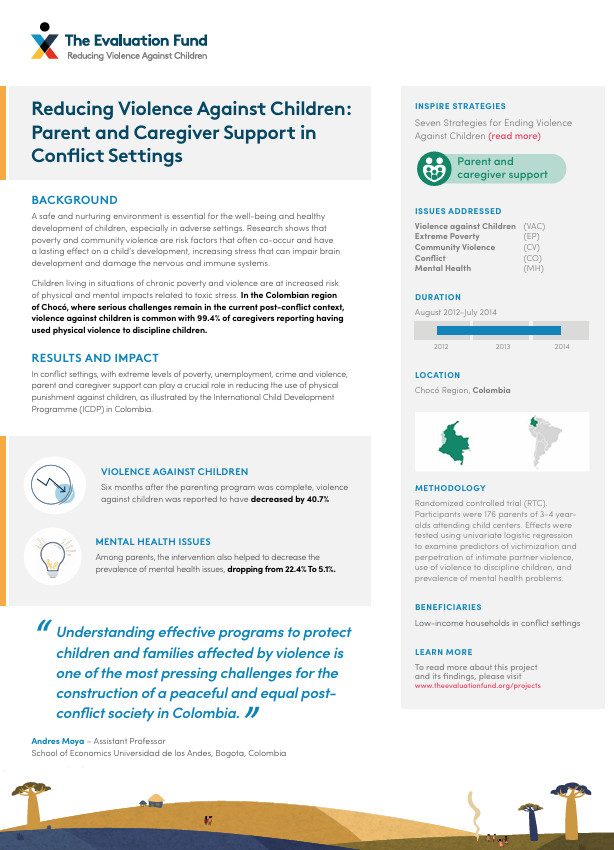
A safe and nurturing environment is essential for the well-being and healthy development of children, especially in adverse settings. Research shows that poverty and community violence are risk factors that often co-occur and have a lasting effect on a child’s development, increasing stress that can impair brain development and damage the nervous and immune systems. Children living in situations of chronic poverty and violence are at increased risk of physical and mental impacts related to toxic stress. In the Colombian region of Chocó, where serious challenges remain in the current post-conflict context, violence against children is common with 99.4% of caregivers reporting having used physical violence to discipline children.
RESULTS AND IMPACT
In conflict settings, with extreme levels of poverty, unemployment, crime and violence, parent and caregiver support can play a crucial role in reducing the use of physical punishment against children, as illustrated by the International Child Development Programme (ICDP) in Colombia.
VIOLENCE AGAINST CHILDREN
Six months after the parenting program was complete, violence against children was reported to have decreased by 40.7%
Among parents, the intervention also helped to decrease the prevalence of mental health issues, dropping from 22.4% To 5.1%.