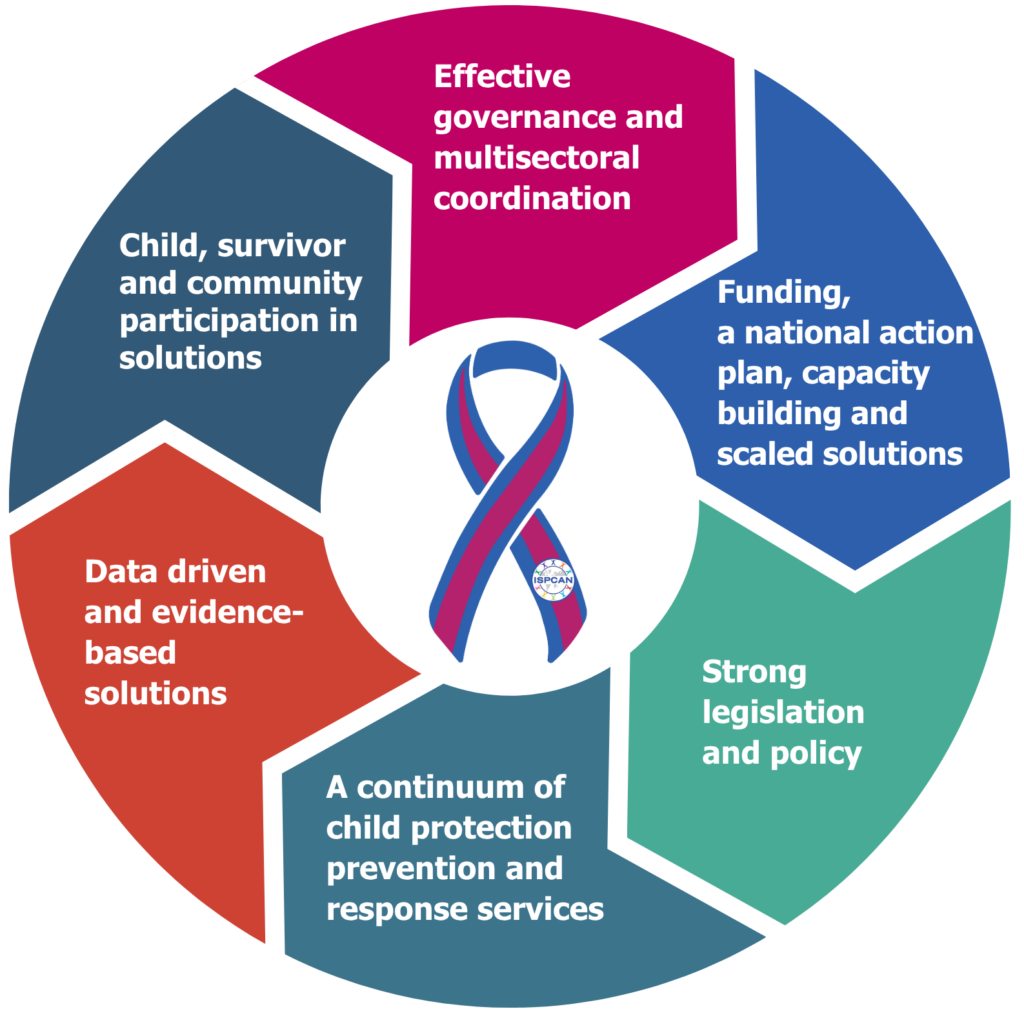
The Integrated Response Framework (IRF), featuring the Te Ako Manaaki Practice Model, is an effective cross-sector approach developed in Aotearoa New Zealand to improve outcomes for children, young people, and families experiencing complex need. First developed for at-risk youth, it has since been applied across education attendance, family harm, and disability sectors. The framework operates at both system and relational levels, strengthening pathways, triage, referrals, and agency alignment while enabling coordinated, trust-based practice around individuals and whānau.
Using a sequenced 9 Domains model to prioritise coordinated intervention, supported by five actionable practice principles, IRF has demonstrated improved engagement, attendance, earlier intervention, stronger access to services, and better use of existing funding through cost-neutral redesign and reduced duplication. Beyond individual cases, it has strengthened joined-up responses across agencies and communities. It offers governments and NGOs an adaptable, scalable model that supports measurable targets in education, health, safety, wellbeing, and violence prevention.

Janette Searle, Chief Executive, NorthAble Matapuna Hauora (Aotearoa New Zealand) – Lead presenter and developer of the Integrated Response Framework (IRF) and Te Ako Manaaki Practice Model.
Scott Samson, Senior Representative, New Zealand Ministry of Education – To share insights from the early development of the model and its influence on policy, strategy, commissioning, and implementation within government systems.
Te Rau Allen, Kaupapa Māori and Development Manager, NorthAble Matapuna Hauora (invited / to be confirmed) – To share how the framework supports culturally grounded practice, whānau-centred engagement, Whānau Ora principles, and improved outcomes for Māori and diverse communities through relational, strengths-based cross-sector collaboration.

The session will be delivered as an interactive policy and practice presentation combining real-world case examples, implementation insights, and facilitated audience discussion.
It will begin with a concise overview of the Integrated Response Framework (IRF) and its application across education, family harm, and disability sectors, followed by examples of measurable outcomes at both case and system levels.
Participants will then be invited to reflect on challenges in their own jurisdictions through guided discussion prompts focused on fragmentation, early intervention, and cross-sector collaboration.
The session will conclude with an open exchange on how the framework could be adapted within different government, NGO, and community contexts. This format is designed to encourage practical learning, peer exchange, and policy-focused dialogue.