Strengthening Legal and Policy Frameworks to Combat Online Child Sexual Exploitation and Abuse — Lessons from practice-based knowledge (PbK) in Kenya and the Philippines

Presented By:

terre des hommes netherlands
Terre des Hommes Netherlands (TdH NL)
Kenya National Council of Justice
National Council on the Administration of Justice, Government of Kenya
sfh_full_colour_centralised_rgb
The Safer Futures Hub
02-Bidlisiw_White_Square
Bidlisiw Foundation
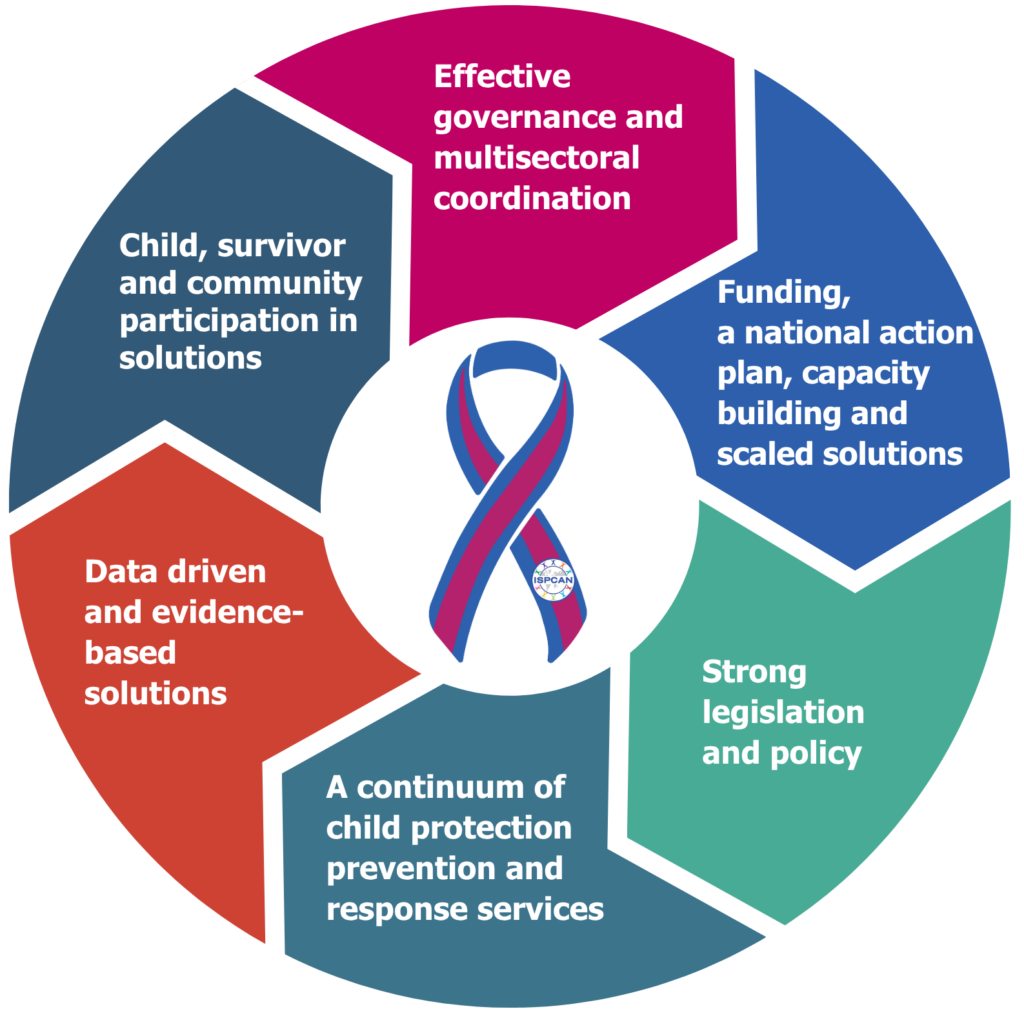
The Six pillars of success from the Rise Up Policy Forum.
Frontline experience holds critical insights for strengthening policy responses to online child sexual exploitation, yet this practice-based knowledge (PbK) remains underutilised in formal evidence and decision-making systems. PbK offers practical lessons for driving meaningful systems change. This session draws on experiences from Terre des Hommes Netherlands and government partners in Kenya and the Philippines under the Safety for Children and their Rights Online and Step Up the Fight Against Sexual Exploitation of Children programmes. It will highlight concrete policy shifts, including the development of local ordinances and institutionalised multi-stakeholder collaboration to better identify, document and respond to OCSEA cases in Kenya. Following a brief presentation, participants will engage in a highly interactive exercise using a Rapid Systems Lab methodology and practice-based knowledge tools. Co-led by Terre des Hommes Netherlands and Safe Futures Hub, with government co-hosts, the session will culminate in a co-created position paper with actionable recommendations.
Rise Up Session Date and Time:
August 27, 2026 1:30 pm
Country or Region Focus:
Asia, Africa
Type of Session:
Interactive policy and systems-change workshop featuring country case studies, practice-based knowledge, and facilitated group discussions to generate actionable recommendations.
Public Health Pillar Focus:
Policy and Legislation, Effective Governance and Multi-Sectoral Coordination

Speakers

Atty. Gilbert Arrabis, Jr., Local Chief Executive/ Municipal Mayor of Daanbantayan Island, Cebu: The representative will share the best practices of the government unit and highlight how integrating anti-OSAEC ordinances into local governance facilitated landmark prosecutions in Cebu through multi-sectoral coordination. The speaker will also describe formal multi-stakeholder convergence to promote a unified, holistic approach to child protection.  

Dr. Marang'a M. W., Executive Director, National Council on the Administration of Justice in Kenya: The representative will share best practices related to effective and sustainable multi-stakeholder collaboration to better identify, document and respond to OCSEA cases. This experience shows how combined national and subnational strategies can improve child protection systems and provides opportunities to inform a national scale up strategy.  

Dr. Claire Cody, Head of Research & Influencing, TdH NL: The representative will share the key strategies and policy gains from two landmark projects implemented by TdH NL with its partner organisations in the Asia-Pacific and Africa Regions.  

Arti Mohan, Lead Technical Specialist, Practice-based Knowledge, Safe Futures Hub: The representative will share learnings and tools on how practice-based knowledge can be used to strengthen prevention and response in childhood sexual violence drawing on the Asia-Pacific and African case studies. 
Session Aims

  • To examine how practice-based knowledge (PbK), grounded in frontline experience and lived expertise, can strengthen the prevention of and response to child sexual violence, particularly in the context of online risks.
  • To facilitate critical reflection on the key drivers and barriers to systems change, with a focus on how local action and inter-sectoral collaboration can influence and accelerate national policy reform on online child sexual exploitation and abuse.
  • To identify and analyse effective strategies and policy gains, and explore how these can be adapted, scaled, and replicated across the Asia-Pacific and Africa region.

Session Format

Visual presentation 30 mins - Speakers will use brief but visually appealing PowerPoint presentations to deliver their messages. Presentations will include children’s voices from both countries. Interaction 30 mins - The session will use a Rapid Systems Lab methodology, combining short inputs with structured, small-group discussions. Participants will work in breakout groups to analyse key drivers, barriers, and scaling pathways based on the Philippines and Kenya case studies. Insights will be shared in quick plenary feedback and prioritised through live voting, resulting in a set of actionable recommendations that will feed directly into a co-created position paper. Conclusions and output - Lessons for the region and a co-created policy brief.