Policy Brief

Using the Integrated Response Framework to Build Cross-Sector Ecosystems for Child Wellbeing and the Prevention of Child Harm

Executive Summary

Around the world, governments invest billions of dollars annually in education, health, child protection, justice, housing, disability and social services. Despite this investment, too many children continue to experience preventable harm, family adversity and poor life outcomes.

Most countries already have the services needed to improve outcomes. The challenge is rarely a lack of services, but that systems remain organised around institutions, funding streams and professional boundaries rather than around the lives of children and families.

Children do not experience government services separately. A child with declining school attendance may also be living with family violence, poverty, housing instability, disability or social isolation. These experiences are interconnected, yet the systems designed to respond often remain fragmented.

This brief argues that preventing child harm requires governments to move beyond multi-agency coordination towards integrated cross-sector ecosystems. It proposes the Integrated Response Framework (IRF), featuring the Te Ako Manaaki Practice Model, as a practical architecture enabling governments and communities to organise existing resources more coherently around children and families.

Drawing on IRF implementation in Aotearoa New Zealand, this brief shows how governments can strengthen early intervention and reduce duplication through integrated ecosystem design rather than additional programmes — an adaptable architecture suited to diverse cultural and governance contexts.

The Questions We Sought To Answer:

How can governments move from fragmented services to integrated ecosystems that better prevent child harm?
What conditions enable governments, indigenous organisations, communities and other sectors to work together around shared outcomes?
How can existing resources be organised more effectively before investing in additional programmes or services?
Using the Integrated Response Framework to Build Cross-Sector Ecosystems for Child Wellbeing and the Prevention of Child Harm
Country or Region Focus:
Australia & New Zealand
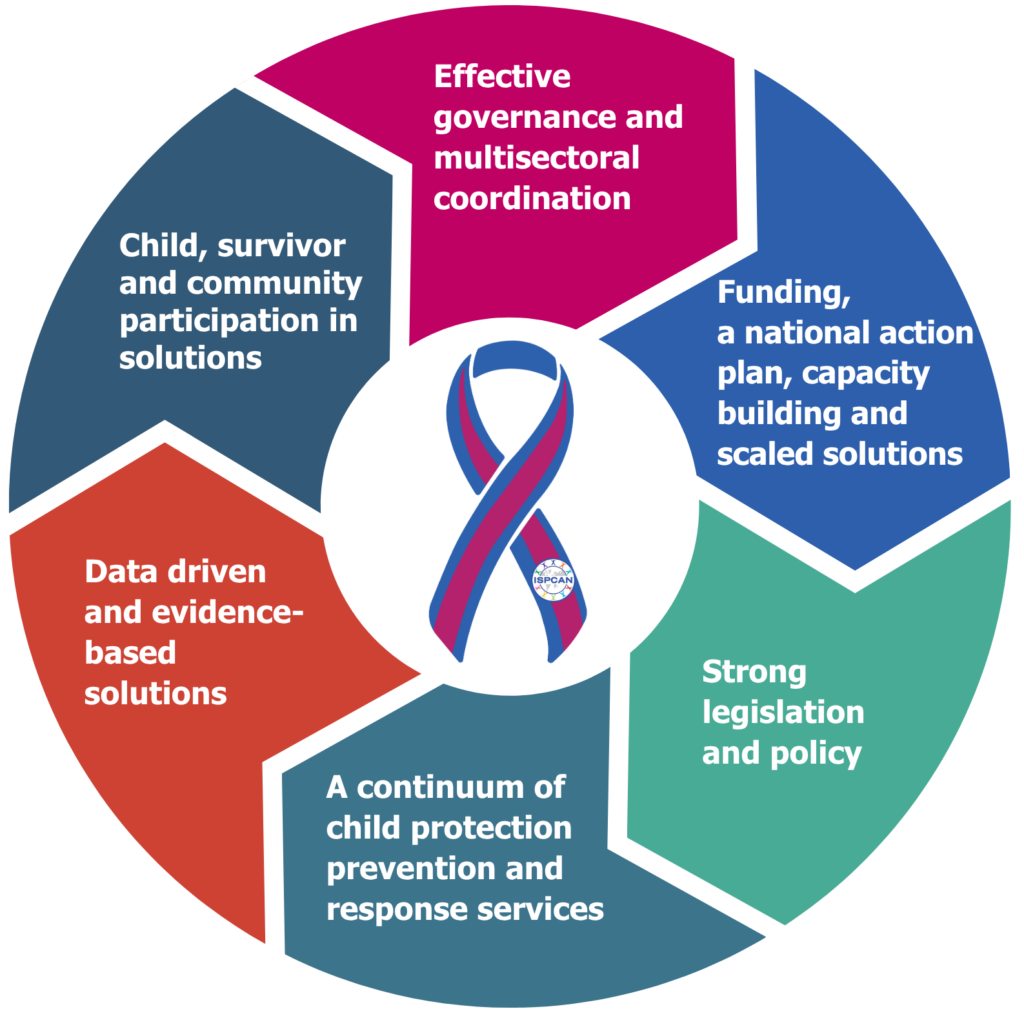
Public Health Pillars:
Effective Governance and Multi-Sectoral Coordination
Key Elements IRF - Te Ako Manaaki
The Integrated Evaluation Architecture

Contributing Partners:

Te-Ako-Manaaki-rpdmk3cxyaeynggen1u7lmevt8b70mcbhndjy0rsao.jpg
NorthAble Matapuna Hauora
Te-Ako-Manaaki-rpdmk3cxyaeynggen1u7lmevt8b70mcbhndjy0rsao.jpg
Ministry of Education, Aotearoa New Zealand

About ISPCAN Rise Up Policy Forum

The ISPCAN Rise Up Policy Forum is a global initiative to catalyze progress in child protection through a public health and system strengthening approach. It brings together governments, researchers and practitioners in a community of practice and learning, to build on and translate into action the pledges made during the 2024 Ministerial Conference on Ending Violence Against Children.

Supported by:

ISPCANLogo (002)
SOS Kinderdoerfer Weltweit Logo