Session details
Date and time
June 24, 2026 3:30 pm
Country or region focus
Africa
Type of session
Africa Huddle 2026
Public health pillar focus
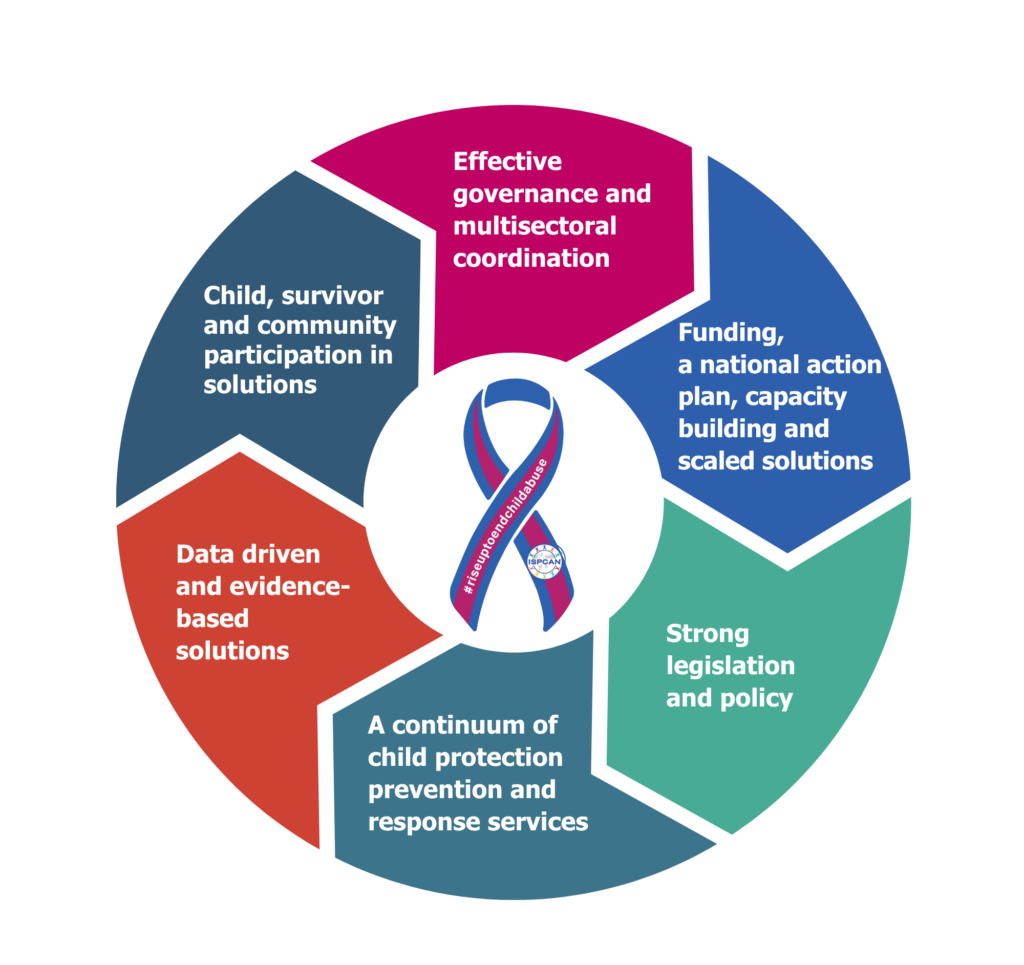
A Continuum of Child Protection Prevention and Response Services, A Holistic Approach that Includes All of The Pillars
Presented by:
sfh_full_colour_centralised_rgb
Safe Futures Hub
IIDC Logo
IIDC
For attendees

Session resources

Slides, handouts and links for this session.

Downloadable resources

No resources available yet

External resources

No resources available yet
About this session

FROM LEARNING TO ACTION

The goal of this session is to critically examine current violence prevention approaches, how knowledge influences decisions, and opportunities to strengthen primary prevention through national policies, programmes and systems. After key learnings from the session, we will discuss the following:

Question 1: If we wanted to prevent what happened to the young girl in the Huddle case, what would need to change in our current prevention approaches and systems? (Consider whether existing programmes address the underlying drivers of violence at different levels, and where important prevention gaps remain.

Question 2: Whose knowledge informs the design of violence prevention programmes in your context, and who has the power to influence these decisions? (Consider whose perspectives are prioritized, whose may be overlooked, and what could help ensure that different forms of knowledge meaningfully shape prevention decisions.)

Question 3: What is one priority your country could make to strengthen primary prevention, and what would it take to make that change happen? (Consider the policy commitments, investment, partnerships, institutional capacity or accountability mechanisms needed to turn this priority into action)

About the Huddle model

The ISPCAN Huddle is a case-based, multidisciplinary learning and systems improvement approach that examines a real child maltreatment case through a 360-degree retrospective review framed by a public health perspective. Policy Huddles engage policymakers, NGO leaders, researchers and system administrators to identify systemic gaps, fiscal implications and policy reform opportunities.

Public health pillar focus

A Continuum of Child Protection Prevention and Response Services, A Holistic Approach that Includes All of The Pillars

Learning objectives

What participants will take away

To shift the Huddle discussion upstream, from responding to violence against children to preventing it
Support participants to identify evidence-informed, contextually relevant priorities for strengthening primary prevention through policies, programmes and systems
Distinguish primary, secondary and tertiary prevention (response) and their complementary roles in a comprehensive public health approach
Recognize how interacting risk and protective factors across the socioecological model inform multilevel violence prevention
Appreciate the value of integrating research evidence, practice-based knowledge and lived experience, and ensuring their meaningful contribution to prevention programme decisions
Identify evidence-informed priorities for strengthening primary prevention through policies, programmes and systems
Session leaders

Presented and led by

Lina Image
Lina Digolo
Capacity Strengthening Specialist, Safe Futures Hub: Solutions to End Childhood Sexual Violence
Lina Digolo is an epidemiologist with over 17 years of experience working across Africa and Asia as a technical expert in health systems strengthening, capacity building, research, and policy advocacy. She has dedicated her career to bridging the gap between evidence and action—supporting national governments, civil society organizations, multilateral and bilateral agencies, and philanthropic donors to design and implement impactful, evidence-informed policies and programmes, particularly in the Global South.

Lina is widely recognized for her technical leadership in the prevention of violence against women and children. She has led and contributed to over 20 studies on violence prevention, parenting, and adolescent health, many of which have informed national guidelines, protocols, and policies across the region.

A passionate advocate for research uptake, she has designed and led capacity-strengthening initiatives for parenting implementers, child protection officers, and GBV practitioners, and serves on several global technical advisory boards focused on ending violence against women and children.
BEATRI~2
Beatrice Nyakwaka Ogutu
Executive Director of Investing in Children and their Societies – Strengthening Protection (ICS-SP)
Beatrice Nyakwaka Ogutu is a highly accomplished professional with two decades of experience dedicated to fostering collaborative solutions and inspiring action to disrupt cycles of violence, poverty, and inequality in Africa. Her career is marked by a profound commitment to preventative approaches, translating complex challenges into impactful and scalable strategies. As Executive Director of ICS SP, she has led transformative programmes across Kenya, Tanzania, and Côte d’Ivoire, that address intersecting forms of violence through evidence-based, gender-transformative parenting and caregiver support interventions. Her work challenges harmful social norms while nurturing safe, respectful, and non-violent relationships in families, schools and communities.

Beatrice possesses a unique ability to bridge the gap between policy and practice. She has played a pivotal role in advancing award-winning solutions that promote long-term violence prevention and positive community development. Her efforts have consistently empowered vulnerable populations, including children, young people, and women to live with dignity and opportunity across diverse African contexts. One of the most notable examples of her leadership is the Gender Transformative Skilful Parenting Programme™, which she co-designed and championed. Now adopted by the Kenyan government for nationwide implementation, it exemplifies her capacity to drive systemic change at scale.

Beatrice brings a deep commitment to elevating voices from the Global South and ensuring that community-led practices shape the national and global prevention agenda. She fosters cross-sector collaboration to embed violence prevention into broader systems, including ECD, education, child protection, gender and social policy, working closely with donors, practitioners, and civil society to sustain and scale local solutions that address intersecting forms of violence and exploitation holistically.

Recognized for her strategic leadership and unwavering commitment to justice, Beatrice is a trusted contributor to international boards and national advisory platforms focused on VWAG, VAC prevention, gender equality, ECD and family strengthening. She actively champions increased investment in caregiver support, early childhood development and advocating for inclusive, responsive systems that protect and empower communities. Known for her integrity, compassion, and vision, she inspires partnerships that build resilient, equitable environments where children, women, and families can thrive in safety, dignity, and opportunity.
Photo - Agnes Wasike SQUARE
Agnes Mutonyi Wasike
Technical Advisor Knowledge Management Impact and Innovations Development Centre (IIDC)
Agnes Mutonyi Wasike is a Ugandan child rights and development management specialist with 25 years' experience spanning social protection particularly social care and support for children, systems strengthening, knowledge management and national coordination.

She served as the coordinator of the National Child Protection Working Group (CPWG) within the institutional framework of the Government of Uganda Ministry of Gender, Labour and Social Development for nine years (2012- 2021). While coordinating the national CPWG she was co-opted into national and regional processes for development of policy frameworks for child wellbeing, namely— Coordinated the mapping of national child protection systems (2012-2013), development of the National Child Policy (2020), the National Child Participation Strategy (2017-2018), National Parenting agenda setting and mapping of parenting Interventions (2019).

At East Africa Region, Agnes was part of several East African Community Child rights experts’ policy development processes, notably the development of the East African Community Child policy (2005); and the Minimum standards for delivery of comprehensive services for Children and Youth (2006).

Prior, Agnes worked with the Forum for African Women Educationalists – Uganda Chapter (1997-2017); and Share an Opportunity Uganda (2017- 2011). The decade of social work practice with vulnerable children in school settings and rural communities across Uganda, combined with coordination of national child protection systems and regional policy formulation processes has deepened Agnes’s knowledge on facilitators and barriers to effective child protection in Uganda and East Africa.

Currently, Agnes is a part time Advisor, Knowledge Management and Learning at Impact and Innovations Development Centre (IIDC).
Part of the ISPCAN Huddle

Explore the full Uganda 2026 program.

2027 Regional Event

Africa Regional Rise Up Policy Forum and Huddle Registration open now.

The first ISPCAN regional Rise Up Policy Forum + Huddle will explore the contexts, strengths, challenges and solutions specific to Africa.
Event Dates:
February 23-25, 2027
Register today to attend in person.