Search Suggestions
      Global Report

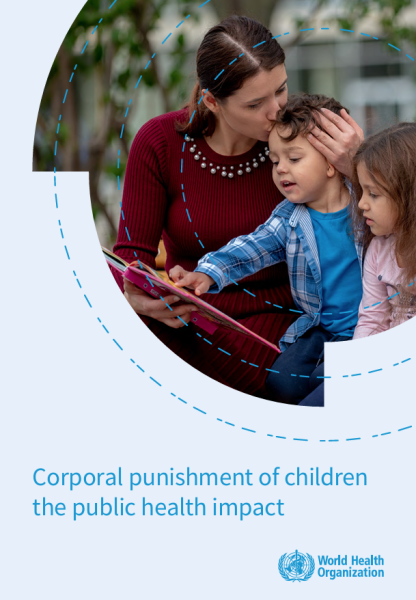
      WHO Global Report - Corporal Punishment of Children the Public Health Impact

      Corporal punishment of children: the public health impact

      Corpal punishment

      This technical report describes the prevalence, risk factors for, and consequences of child corporal punishment, which it defines as “any punishment in which physical force is used and intended to cause some degree of pain or discomfort, however light”. Globally, an estimated 1.2 billion children aged 0-18 years are subjected to corporal punishment at home each year, and between a quarter and half of children experience corporal punishment in schools. The consequences of child corporal punishment can last a lifetime and undermine physical and mental health, education, and social and occupational functioning. The report describes underlying risk factors at the individual, family, community and societal levels. It concludes that there is now overwhelming scientific evidence that child corporal punishment carries multiple risks of harm and has no benefits for children, parents, or societies. Efforts to enact and enforce laws banning corporal punishment are necessary but not sufficient, and should be complemented by efforts to support parents and teachers in the use of positive, non-violent approaches to discipline.

      00
      Days
      00
      Hours
      00
      Minutes
      00
      Seconds
      Play Video
      Listen to the Webinar Recording
      Play Video
      "But I grew up fine, didn't I?"

      Global Report Date:

      August 22, 2025

      Region:

      Global

      Topics:

      Corporal Punishment
      Violence Against Children
      WHO Global Report - Corporal Punishment of Children the Public Health Impact
      Summary document: Global launch of WHO Report on Corporal Punishment of Children: A call to end the most common form of violence
      The Guardian: Corporal punishment carries ‘multiple risks’ to children’s health, says WHO

      Research Objectives:

      Corporal punishment is highly prevalent globally, in homes, schools and other settings
      There is overwhelming scientific evidence that corporal punishment of children carries multiple risks of harm and has no benefits for children, parents or societies
      There are strong associations between corporal punishment and a wide range of negative impacts across the lifespan
      A growing number of countries have prohibited corporal punishment, but law reform alone is not enough to eliminate it
      Corporal punishment is a global public health concern

      Contributing Partners:

      WHO
      World Health Organization
      CP WHO

      Join ISPCAN Today!

      You’ll receive valuable member benefits including:

      • Access to the Member Connect Platform
      • Discounted registration to ISPCAN Congresses
      • Access to the extensive ISPCAN research library

      Connect More

      Member Marketplace

      Knowledge Hub

      Partner with Us